
October 11, 2010
Posted by Danny
Defender of The Phil
 Let me tell you something – and you can carve this in stone so it’s never forgotten: I absolutely adore Phil Collins and I don’t care who knows it! But seriously…(hey!) this is not a joke. I really do. Phil Collins – in both his solo and Genesis work – is far and away my favourite recording artist. I am, you might venture, a “Phil Phan”.
I discovered the singer/songwriter/drummer in the early 80’s when he was an ubiquitous presence on UK radio thanks to his fronting of increasingly mainstream prog-rockers Genesis, who by then were habitual visitors to the Top 40 with the likes of Turn It On Again and Mama, and his immediately-successful solo career, spring-boarded by his potently-atmospheric debut (and now signature) single In The Air Tonight in 1981. As such, I distinctly recall his double presence on the inaugural double-cassette (cassette!) edition of “Now That’s What I Call Music Vol.1” in late 1983 – the one with the leather jacketed pig on the front – the album kicking off with his infectious No.1 hit Motown cover You Can’t Hurry Love and with Genesis’ That’s All appearing on the second tape.
Ever since, I’ve been a passionate – nay, die-hard – fan of the man. His solo work, anchored on an emotionally-direct brand of Pop/Rock, influenced by R n B, Soul, Motown and The Beatles, always held huge appeal for me (being the hopeless romantic I am) and, via Genesis, you truly see his enthralling drumming chops. I’ve seen him live eight times – albeit only one of those times in Genesis, alas – and have been a rapacious collector of his records. I deem him to be one of our great musical exports: a great singer, a charismatic frontman, an accomplished songwriter, a virtuoso musician – a true Entertainer. Hugely popular, too and on this front, Collins record speaks for itself: nearly 250 million album sales (solo and Genesis), one of only three solo artists to exceed 100 million album sales, nine No.1 singles (back when it was a considerable sales challenge) and many more Top 40 ones, eight Grammy’s (23 nominations), one Academy Award (three nominations), four American Music awards, two Golden Globes, four Brit awards, four Ivor Novello’s and a Royal Victorian Order from the Queen!
My appreciation of Collins work is not blind. After showcasing himself as a veritable one-man hit factory on his first four albums – all much loved and known backwards by me – the determined melancholy of Both Sides (1993) made it a hard album to love, not least for its prominent use of a drum machine – about which I remember grumbling “For Christ’s sake! Don’t you know who you are?” – but it’s a record which I grew to respect and enjoy. The upbeat Dance Into The Light (1997) was a decidedly mixed bag, dogged by some odd musical directions. (Indeed, both those albums were afflicted by Collins’ weird musical preference for bagpipes, no less, making them couldn’t-be-more at odds with Britpop and other prevailing genres of the time. And placing them in a cover of Bob Dylan’s The Times They Are A-Changing? Phil, please…)
 And I make no bones about it: I greatly dislike Testify (2002), undoubtedly his weakest (and lowest-selling) album, the lacklustre and uninspired feel of which I always suspected was down to the domestic harmony he had at the time. (Collins is firmly of that classical song-writing breed who thrives on emotional pain.) The bloody drum machine was back too. I rarely, if ever, listen to it. Consequently, a particular pleasure of his latest record, Going Back (2010), in which he recreates 29 Motown classics with enchanting devotion and fealty, is just how engaged he sounds. A fantastically enjoyable paean to his musical youth, his meticulous recreation of the Motown sound – aided by three of “The Funk Brothers” – is hugely impressive and to which his voice, still as smooth as it ever was, fits wonderfully.
Yet, there’s a problem. Express a heartfelt enthusiasm for Philip David Charles Collins of Chiswick and his work and it’s like you’ve made some breathtaking and shocking faux-pas of musical taste. Snorts of derision fill the air and you are viewed with suspicion. Despite his phenomenal success, Phil Collins music has somehow become a byword for “bland” and he’s been a whipping boy for the UK media for many years. Even now, at a time when so many distinctly eighties acts, like Duran Duran, Simple Minds and OMD, are being respectfully name-checked as formative inspirations on groups like The Killers, Hot Chip et al, Collins – inarguably one of the biggest and defining talents of the decade – remains curiously much-maligned. Indeed, doesn’t a latter-day star like Robbie Williams essentially emulate the Collins mould, the cheeky chappie persona graduating from a popular group to massive solo success? (Although, unlike Williams, Collins successfully cracked America – twice)
If, as the saying goes, familiarity breeds contempt, then it’s easy to see why in Collins’ case. In the Eighties, the era of his zenith, Collins seemed to be everywhere. The decade saw him generate eight increasingly successful albums (four his own, four with Genesis – most with accompanying world tours); guest spots on countless albums for artists like Peter Gabriel, Robert Plant, ABBA’s Frida, Philip Bailey and Tears For Fears; producing Eric Clapton’s most commercially successful albums; playing both the London and Philadelphia Live Aid concerts in 1985 (the latter backing Led Zeppelin), a regular presence at the all-star Prince’s Trust charity concerts and indulging his acting roots (enjoyably, I thought) with the film Buster in 1988.
Yet, is his music really the epitome of bland? Granted, Collins’ solo work is populist fare, but since when has that been a crime? His first four solo albums – Face Value (1981), Hello, I Must Be Going (1982), No Jacket Required (1985) and But Seriously… (1989) – are all excellent, highly-memorable examples of popular, slickly-made albums packed with strong, well-crafted, radio-friendly singles and all of which combine to form the plinth upon which Collins’ status as a genuine music superstar stands. Similarly, his work with Genesis – where you’ll hear a more experimental Collins (aided, of course, by Tony Banks and Mike Rutherford) – can hardly be written off as inconsequential. The group’s late 70’s albums are superb examples of Prog Rock, their increasingly pop-orientated efforts in the 80’s contained some potently-innovative work (the atmospheric powerhouse of Mama in 1983) and their commecial zenith, Invisible Touch (1986) is a perfect fusion of Prog Rock and Pop.
 As a journalist, I find it somewhat embarrassing and irritating that media coverage about him in the UK is so woefully lazy, knee-jerk and purposely uninformed. Take, as a prime example, his hit song “Another Day In Paradise” from the best-selling But Seriously (1989), which won the 1991 Grammy Award for Record of The Year. Some chose to interpret his heartfelt plea to help the homeless as pointedly and disgracefully hypocritical, given that, by then, he was a multi-millionaire – yet it’s not like he said “Please help the homeless – now, excuse me while I f*** off to my gated Surrey mansion to feast on roast Swan liberally sprinkled with the finest Peruvian Flake off the perfectly flat stomach of a teenage Dutch lingerie model.” [*]
Of course, what is ever-so-conveniently ignored is the fact that Collins has inarguably put his money where his mouth is on the homeless issue. At all his solo world tours, from But Seriously onwards (numbering hundreds of shows) Collins would have scores of volunteers from homeless charity Shelter – or a foreign equivalent – to collect donations and, onstage, Collins actively discouraged fans purchasing tour merchandise, insisting that he didn’t need the money and it was better given to the homeless. (If you didn’t heed his recommendation, the t-shirt you bought had “This is the t-shirt Phil told me not to buy!” emblazoned on the back! ). It’s hardly the behaviour of a self-serving hypocrite – and certainly doesn’t make for sexy copy.
Collins has routinely fallen in to the trap of actually expecting a dialogue with his media detractors, in an effort clarify the falsehoods about him, such as the oft-mentioned “Divorce by Fax!” episode or the “Phil’s A Tax Exile!” or the “fact” (read: pointed and baseless inference) that he’s a closet Tory (likely just because he’s a millionaire and all Tories are rich, right?). He’s been well known for actually contacting the reviewers who have idly dissed him, essentially ignoring the music and labouring a gleefully-false caricature. Such Quixotic activity, it goes without saying, is veritable catnip for a snark-obssessed media, ever eager to chronicle who’s “slammed” who and wholly uninterested in such things as fair play. After all, if he were a real rock star, he wouldn’t give a shit. However, I admire that he tried to make the connection.
 As such, there’s an inherent irony that, as derided as Collins is in the mainstream media, in musician circles, he is accorded a staggering degree of respect and admiration – and rightly so. A world-class drummer, he is one of the few tub-thumpers whose style and sound was instantly recognisable, and highly sought after. Watch footage of his drumming – especially his thrilling drum duets with Chester Thompson – and you are watching true musicianship of the highest calibre. They are things of beauty. I am totally in awe of his drum work, ultimately inspiring me to pay the drums myself (purely for fun and, for someone self taught and who plays by ear, I’m not half bad!).
Last year, when news broke of the nerve damage to his left arm – sustained on Genesis 2007 reunion tour – that initially put paid to his ability to drum (possibly permanently) I confess to actually being struck by a genuine sense of loss. Despite it being obvious for years that he was long past his late 70’s/early 80’s prime as a player, he was still superb and engrossing behind the kit – much like Stewart Copeland – and there was something dreadfully sad about the notion of never hearing him thrashing the skins again, even it was just In The Air Tonight’s signature ba-dum, ba-dum, ba-dum, ba-dum, dum-dum…
The intensity of the opprobrium against Collins has both intrigued and mystified me. Is it because that, musically, he’s not regarded as progressive innovator? That he’s ploughed a very specific furrow for an undemanding audience? To a certain degree, so has Eric Clapton. All of his eight albums in the last twenty years have predominantly paid forthright homage to the Blues genre that influenced him (beautifully, I add). Yet, Collins doing an album of reverently-crafted Motown covers is dismissed as redundant. Collins is no less accomplished a musician or a singer – does Clapton get a pass simply because he’s Eric Clapton, whose playing of the electric guitar is as iconic as the instrument itself, that he’s based in the more critically-revered Blues Rock genre that spawned Jimi Hendrix and whose star similarly first rose in the mythical Sixties – the underlying inference being that he’s a proper rock star?
 Perhaps it’s a matter of image. Collins, diminutive, balding and, well, ordinary-looking, was never a conventional pop/rock star. Lacking the more obvious handsomeness of, say, Robert Plant, Sting or Simon LeBon Collins was a text book example of how, incredible musical talent aside, innate charm and a genuine air of average blokeishness could actually take you a long way in the mainstream. As actor and Genesis fan Philip Glenister (Life on Mars’ Gene Hunt) recalls: “I felt a connection with Phil. As someone who’d been to the local comprehensive, I could identify with Phil as the grammar school kid amongst all these Old Carthusians. And here he was coming out and delivering the banter. The key was his interaction with the audience. He was very inclusive, involving every part of the arena, even “the people in the cheap seats”. It’s showbiz but very personal.”
With so many music stars cultivating an aura of otherness as a necessity, there was always something disarming and refreshing about Collins’ affability. It’s been interesting to see him recently express deep embarrassment about his 80’s stage persona. On the one hand, it’s natural – who doesn’t get embarrassed by their youthful image – but, on the other, he should remember that it worked. People loved it – like the 288, 000 people who saw him performing with Genesis over four nights at Wembley Stadium in July 1986, supporting their mega-selling album Invisible Touch.
Yet, conversely, Collins the rock star never plied a mythology around his persona. Not for him any Plant-esque cry of “I am a Golden God!”. Never an epic boozer like Keith Moon – though he alludes to a period of heavy sessions with Clapton – nor in possession of a titanic drug habit a la Keith Richards, Collins has always appeared the workaholic, absolutely focused on the music and treating it with the utmost seriousness. While this is obviously admirable, it does contravene our expectations of our music stars and, to many, this lack of mythology probably marks him as boring, despite his popularity and success. There is, apparently, nothing to see here, nothing to worship.
Similarly, in the current X-Factor-dominated Pop landscape, where aspiring pop stars are conditioned to believe that physical perfection is everything – talent can be fixed in ‘post’ and creativity is merely an accounting problem – there is perhaps some retrospective disdain for a man who achieved a vast degree of success without having the perfect head of hair, supernaturally-white teeth, toned abs etc, etc. Which is ironic, really, because if the wide-eyed contestants wanted a model of an individual star not moulded to the demands of market research or PR chicanery, who knows how to craft music and make that music popular, Collins is ideal – he’s just not fashionable (nor pliable, which is certainly not a trait Simon Cowell and co. would want to advertise as a positive)
If Collins clamours for critical respect, then it’s worth noting that there is the other side of that fence: I recall having a conversation years ago with a record industry acquaintance who worked with Peter Gabriel – a critical darling if ever there was one – and when we discussed the comparisons of Gabriel’s solo career with his ex-Genesis bandmate, they made an intriguing observation: “Phil Collins would love to have Peter’s critical cache, but Peter would absolutely kill for Phil Collins’ record sales…”.
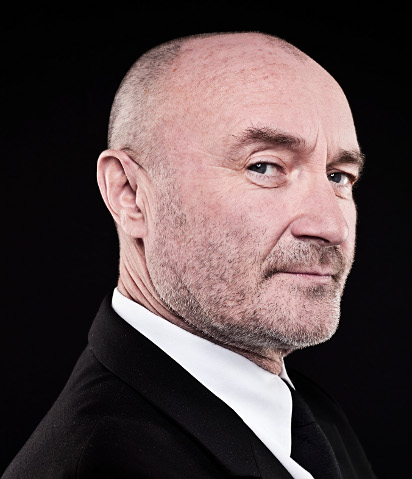 Then again, who cares about critical cache? Critics, so often operating in the fog of self-importance, commonly and crucially forget that, frankly, they are just as full of shit as anyone else (I know, I am one). Collins himself, referring to Genesis, noted: “Well, we’ve never been fashionable. We know that people like us, because our records sell.” And therein lies the rub: you don’t sell 250 million albums if you’re crap. Everyone knows at least one Phil Collins song and, for the great many people who comprise his loyal following, the fans who made all his solo tours sell-outs and recently thrust Going Back to the top of the U.K album charts (his first No.1 album in 12 years) those songs mean something. They’ve provided a soundtrack to important and memorable moments of their lives, because Collins – in his solo output, certainly – deftly managed to inject potent emotions in to three or four minutes of exuberant or beguilingly-sad music, in the finest tradition of The Beatles and so many others.
Ultimately, Collins wholeheartedly deserves respect insofar that, throughout his career, he has clearly demonstrated a superb command of the Pop format, generating songs that have weathered the test of time – it’s been thirty years since In The Air Tonight! – some of which have iconically permeated the pop culture and a great many of which remain firmly beloved by listeners. No matter how unfairly maligned he’s been – and it is unfair, frankly – he still has these huge accomplishments untainted. He’s one of the greats and he’ll be remembered, which is more than you can say for the parade of deluded X-Factor lemmings.
For myself, the music of Phil Collins triggers a lot of great memories of experiencing the myriad elements of being a music fan– mostly involving my best friend James, our long friendship anchored on Phil and Genesis: listening to Invisible Touch and But Seriously… and We Can’t Dance endlessly and studying their liner notes intently at boarding school, playing Easy Lover on the drums at James’ house as teenagers, studiously trying to get those fills just right; trawling the record shops of Notting Hill Gate for the CD single of Land of Confusion containing the b-side Do The Neurotic (fantastic drum part!), watching concert videos (videos!) and trying to figure out how the hell he did that blisteringly-fast fill, actually meeting the man (albeit briefly) at the press conference for the Genesis reunion tour in 2006, singing my heart out along to Mama while watching Genesis (finally!) in Paris the following summer, spending over four hundred quid (ulp!) on the five remastered Genesis box-sets and dancing with my girlfriend Lucy no more than six feet in front of him as he sang Two Hearts earlier this year for an ITV special. For all that and so much more, what else can I say, but…
Cheers, Phil!
[*] Although, who knows, he may well have done. That certainly would have taken care of the mythology issue.
4 Comments
http://www.youtube.com/watch?v=e553Z1tG5aQ
Phil rules. One of the most underrated artists of our time. This is largely his fault, as he watered down his catalog with a bit of fluff, but on the whole he is brilliant.
Brilliant! Absolutely well put!
Regarding your point” “If, as the saying goes, familiarity breeds contempt, then it’s easy to see why in Collins’ case. In the Eighties, the era of his zenith, Collins seemed to be everywhere. The decade saw him generate eight increasingly successful albums (four his own, four with Genesis – most with accompanying world tours); guest spots on countless albums for artists like Peter Gabriel, Robert Plant, ABBA’s Frida, Philip Bailey and Tears For Fears; producing Eric Clapton’s most commercially successful albums; playing both the London and Philadelphia Live Aid concerts in 1985 (the latter backing Led Zeppelin), a regular presence at the all-star Prince’s Trust charity concerts and indulging his acting roots (enjoyably, I thought) with the film Buster in 1988.”
On that point, I think what happened to Phil verses Peter Gabriel was that Phil was less picky when he recorded and released his work. Gabriel was far more ponderous in this manner and thus perhaps the better music was released and anything subpar ditched, lost or discontinued. Whereas Phil was just a machine churning it out and releasing nearly all of it out during that decade and that lack of “filter” is the price that Phil now pays. The cost has been his credibility.
Still however all those album sales cannot be wrong!